Chayote Recipe: Spicy Mexican Rice with Black Beans

This chayote recipe turns a somewhat unfamiliar vegetable into a hearty, spicy Sonoran Mexican rice with black beans, corn, and cilantro. Chayote squash looks unusual in the market. They are pale green, pear-shaped, and wrinkled at one end. It tastes somewhere between a zucchini and a potato, mild and slightly crisp, and it absorbs bold flavors beautifully. This chayote recipe pairs it with brown basmati rice, serrano pepper, Spanish olives, and diced tomatoes in a one-pot dish that works as a side or a complete vegetarian meal. 

What does chayote look like — pale green chayote squash, a Sonoran borderlands vegetable

What does chayote look like — pale green chayote squash, a Sonoran borderlands vegetable


Chayote (pronounced chy-OH-tay) is a member of the gourd family. It grows throughout Mexico, Central America, and the American Southwest. Markets in Tucson and the Sonoran borderlands carry it year-round. Most Sonoran recipes don’t use it often, which makes this dish a genuine find. Chayote holds its shape during cooking better than zucchini and doesn’t turn mushy the way potatoes can. Peel it, remove the single flat seed in the center, and dice it like you would any firm squash. It takes on the flavor of whatever it cooks with. In this case, serrano chile, garlic, cumin, and a rich vegetable or chicken stock. The Spanish olives are the Sonoran touch that sets this rice apart from any other Mexican rice recipe you’ve tried. 

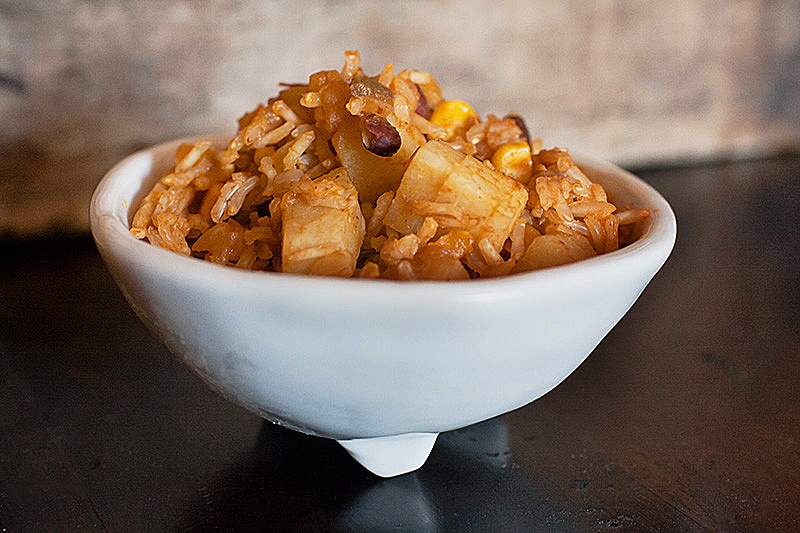
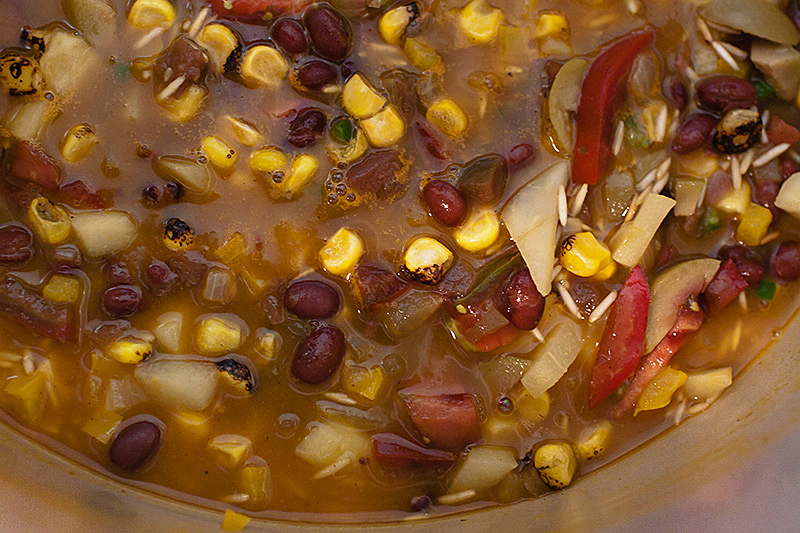
spicy Sonoran Mexican rice with chayote squash, black beans, corn and cilantro. Recipe and photo by Jackie Alpers, Taste of Tucson cookbook.
Prep Time: 10 minutes
Cook Time: 30 minutes
Chayote Recipe: Spicy Mexican Rice with Black Beans
Servings: 4

Equipment

  • Dutch oven
Recipe for a hearty, spicy Mexican rice with chayote and black beans. The Chayote is a somewhat strange looking vegetable that tastes somewhere in between a squash and a potato.
This recipe serves 4-6 as a side dish.

Ingredients

  • 1 Serrano pepper diced small
  • 1 cup frozen yellow corn defrosted
  • 1 tablespoon canola oil
  • ½ yellow onion diced, about 1/2 cup
  • ½ yellow bell pepper seeded, ribs removed and diced
  • 1 chayote squash peeled, seed removed and diced
  • 1 teaspoon salt
  • 1 teaspoon freshly cracked black pepper
  • ½ teaspoon cayenne pepper
  • 2 cloves garlic minced
  • 1 cups brown basmati rice
  • 2.5 cups chicken or vegetable stock
  • ¼ cup roughly chopped Spanish olives
  • 1 can black beans rinsed and drained
  • ½ cup diced tomatoes
  • ¼ cup freshly chopped cilantro leaves

Instructions

  • In a large Dutch oven, heat the oil over medium-high heat. Add the onion, yellow bell pepper and chayote. Saute until just starting to caramelize. Season with salt, pepper and cayenne. Stir in the garlic and rice and saute for 3 to 4 minutes. Add the chicken or vegetable stock, cover and cook for 10 minutes. Stir in prepared peppers and corn, the olives, black beans and tomatoes. Cook until the rice is tender, about 10 to 15 minutes.
    How to make Sonoran Mexican Rice with Chayote and Black Beans.
  • Turn off the heat, add the cilantro and adjust seasonings, if necessary. Transfer to a serving bowl and serve immediately.
Notes

Frequently Asked Questions
What does chayote taste like? Chayote has a mild, slightly sweet flavor with a firm, crisp texture similar to a cross between zucchini and a water chestnut. It's much less watery than zucchini and holds its shape well during cooking. Raw chayote has a subtle cucumber-like freshness; cooked chayote becomes tender and absorbs surrounding flavors readily, making it an excellent addition to rice dishes, soups, and stews.
Where can I buy chayote? Chayote is widely available at Latino grocery stores, international markets, and well-stocked supermarkets in the Southwest. In Tucson and the broader Sonoran region it's a year-round staple. Look for firm, unblemished chayotes with smooth pale green skin. Avoid any that feel soft or have dark spots. If you can't find chayote locally, zucchini or yellow squash makes a reasonable substitute in this recipe, though the texture will be softer.
How do you prepare chayote for cooking? Peel chayote with a vegetable peeler — the skin is thin but slightly waxy. Cut it in half lengthwise and remove the single flat seed in the center with a spoon or knife. Dice or slice the flesh as needed. Some people find the raw flesh slightly sticky on their hands; rinsing under cold water solves this. The seed is edible and can be roasted or sautéed separately if you want to use it.
Is chayote the same as chayote squash? Yes! Chayote and chayote squash refer to the same vegetable. It also goes by mirliton in Louisiana Creole cooking, christophene in the Caribbean, and güisquil in parts of Central America. In Sonoran Mexican cooking it sometimes appears in soups and stews, though it's less commonly used there than in other regional Mexican cuisines.
Can I make this chayote recipe vegan? Yes! Simply use vegetable stock instead of chicken stock. All other ingredients are already plant-based. This makes it a hearty, protein-rich vegan side dish thanks to the black beans. It pairs well with coctel de camaron for a non-vegan spread, or alongside Sonoran flat enchiladas for a fully plant-based Sonoran meal.
What can I serve with this chayote Mexican rice? This rice works beautifully as a side dish alongside Sonoran-style chicken tortilla soup, nachos supreme stuffed bell peppers, or grilled chicken. It's hearty enough to serve as a main dish on its own with a scoop of chunky guacamole on the side.
Course Side Dish
Cuisine Mexican, Sonoran Style, Sonoran Style Mexican
Diet Vegan, Vegetarian
Keyword Chayote recipe Mexican, chayote recipes, Jackie Alpers, Mexican recipes, Mexican rice with black beans and chayote, sonoran recipes, Taste of Tucson cookbook recipe, Tucson Sonora


Order Jackie's Cookbooks

Screenshot
The Unofficial Yellowstone Cookbook Cover
cover of The Unofficial Elf Cookbook by Jackie Alpers. Treat every day like Christmas with recipes inspired by the classic film "Elf".
The Unofficial Elf Cookbook by Jackie Alpers
Food photography by Alpers of loaded hot dogs is an American Photography 41 winner.
Jackie Alpers 2025 World Food Photography Awards for Food Influencer and Food in the Field
Tucson City of Gastronomy designation for Taste of Tucson cookbook